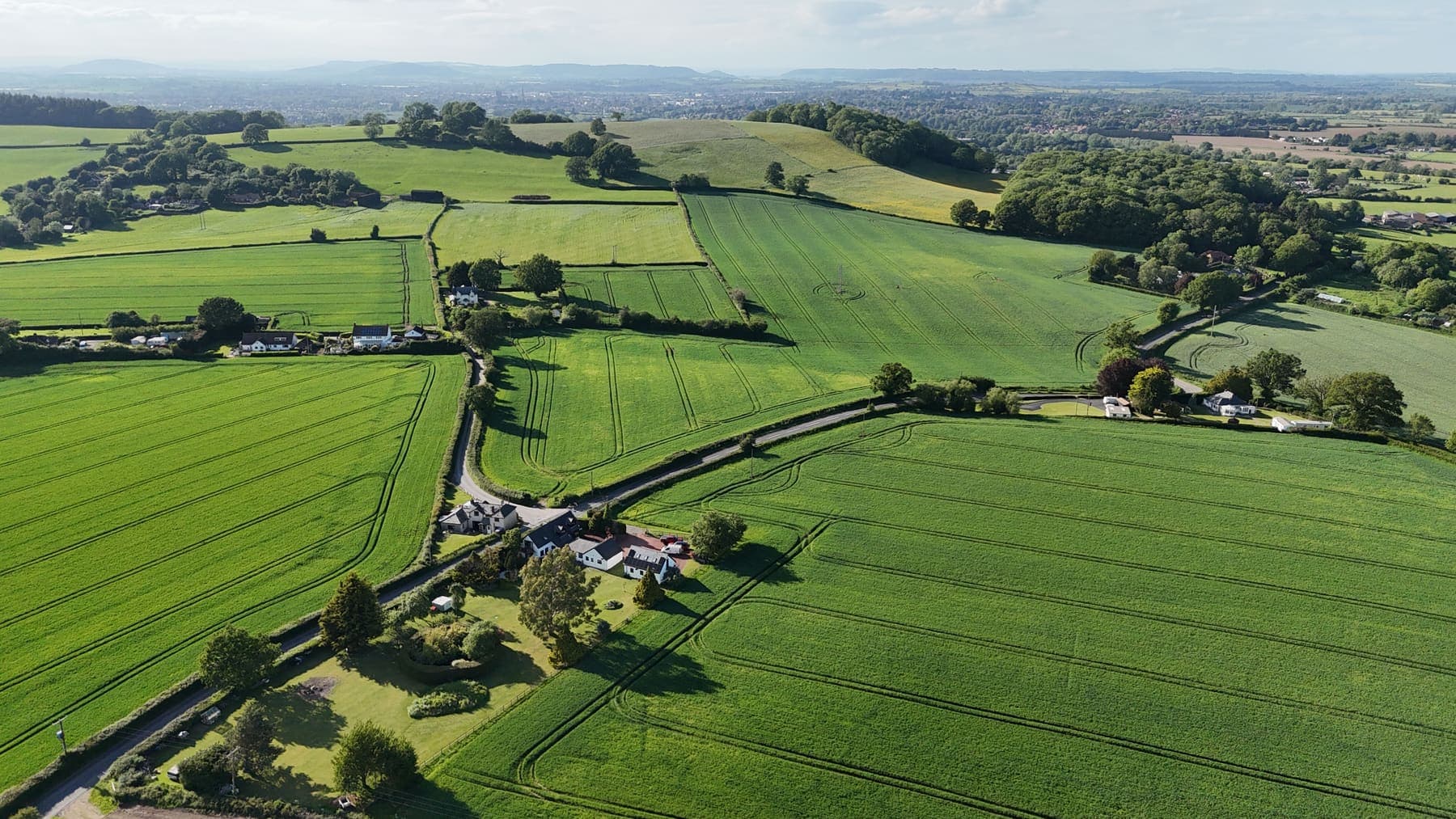
Solar farm row deepens as farmers offered £50k to stay quiet
A solar developer has admitted a mistake after letters offering farmers up to £50k on condition they did not oppose the project were revealed.
A curated set of recent UK research, reporting and policy on what large-scale solar development is doing to farmland, food security and the rural environment. DVAG is not opposed to renewable energy. We are opposed to this proposal, in this place, for the reasons set out below.
A growing collection of reporting on what large-scale solar development is doing to British countryside. We add to it as the coverage grows.
A solar developer has admitted a mistake after letters offering farmers up to £50k on condition they did not oppose the project were revealed.
Climate change threatens the countryside, but the way we decarbonise matters. CPRE analysis shows nearly two-thirds of England's largest solar farms are built on productive farmland. The charity urges Government to shift solar development away from prime farmland and toward smarter, less damaging alternatives.
A coalition booklet from CPRE Hertfordshire, CPRE Essex and fourteen parish councils, prepared with Prof. Mike Alder of the University of Essex. Sets out the landscape, biodiversity, agricultural-land and planning-policy factors that local authorities should weigh when determining large-scale solar farm applications.
More coverage as it appears. Spotted a piece worth adding? Send a link to admin@dinedorvag.org.
Research, ministerial statements, policy briefings, local coverage, and other community campaigns. Curated, not exhaustive.
CPRE's 2025 research showing that 59% of England's largest operational solar farms sit on productive farmland, and 31% of the area they cover is Best and Most Versatile (BMV) agricultural land. The headline figure: 1,300 football pitches of prime farmland already lost. Three sites are entirely on BMV land.
The Institution of Engineering and Technology on the CPRE findings, framing the loss in terms of national food security and the trade-off with current clean-power targets.
The Parliament Research Service's standing briefing on solar farm planning policy. The neutral authoritative source on the policy framework: BMV protection, NPPF requirements, cumulative impact, and agricultural land protections.
A formal council motion stating that “some villages are now completely surrounded by solar farms” and calling on the Secretary of State to take clear steps to prevent the industrialisation of the countryside through clustering. The same pattern is now emerging around Hereford.
An overview of the planned expansion of UK solar capacity to 45 to 47 GW by 2030 and 70 GW by 2035. Useful for understanding the scale of pressure now falling on parishes near grid connections.
The Ministerial Statement on protecting Best and Most Versatile land, setting out the brownfield-first, BMV-avoid principle that underpins national planning policy.
A detailed piece from the leading UK farming publication covering BMV protections, food security, and how the change of government has shifted the policy emphasis.
Recent reporting on Defra's Land Use Framework. Confirms Defra's published position that the most productive BMV agricultural land is “not suggested” for renewable energy.
The Parliamentary briefing prepared for the Westminster Hall debate on food security and land use change. Quantifies the agricultural land projected to shift out of food production by 2050.
Coverage of the 74-acre Anesco scheme near Stoke Edith, approved despite opposition from residents, neighbouring parish councils, and the leader of Herefordshire Council, who described the development as “environmental blight”.
The community campaign against the 99-acre Sinton's End Solar Farm. Particularly significant: the Council originally determined an EIA was required, but that decision was overruled on appeal to the Secretary of State. A direct precedent for the screening question now before the Secretary of State on the Dinedor application.
Coverage of the 114-acre Larport solar farm at Mordiford. Now operational and forming part of the cluster of consented and proposed solar development east of Hereford.
We support the transition to clean energy. We support solar on rooftops, on commercial buildings, on car parks, on brownfield land, and on poor-quality agricultural land.
We do not support 82 acres of industrial-scale glass and steel on productive farmland in the shadow of an iron age hillfort and on the immediate fringe of the Wye Valley National Landscape, when the country has hundreds of better places to put it.
The right energy infrastructure should not require sacrificing the wrong land.
DVAG members are documenting the proposed site, the hillfort, the river, and the village through the seasons. Photos appear here as they’re ready.
Stay tuned.
Stay tuned.
Stay tuned.
Stay tuned.
Stay tuned.
Stay tuned.
Photographers are out now ....
If you’ve come across an article, position paper, court decision, or other community campaign that bears on this case, send it our way. We read every email and add the genuinely useful ones to the list.