
DVAG · Objection toolkit

Seven grounds.
One landscape
worth defending.

The objection window opens the day ILOS lodges a planning application. These are starter letters drafted from the verified facts of the case. Pick the ground that matches your concern, copy the text, personalise it in your own words. Twenty letters making twenty different arguments carry far more weight than twenty copies of the same one.

Read this first

The toolkit makes a lot more sense after a 2-minute read. The How-to section explains what makes an objection count, where to send it, and when.

0
applications lodged
22 Apr 2026
screened out
7
drafted grounds · 7 / 7
A pile of envelopes and folded objection letters in cream, ochre and sage green tones, ready to be sent to Herefordshire Council
Need some inspiration on what to write?
Seven grounds for refusal

Pick the angle that matches your concern.

Each letter is a complete draft. Copy it, edit a sentence in your own voice, and you have an objection ready to send the day the window opens.

01
Heritage and archaeology

Six designated assets in the setting.

The strongest single ground available, on the strength of the County Archaeologist's own description of the Rotherwas Ribbon as “apparently so far unique in Europe”. The application site sits in the setting of six designated heritage assets, from a Neolithic ceremonial monument to an 18th-century country house.

Cites: Ancient Monuments and Archaeological Areas Act 1979 · Section 66(1) Planning (LB&CA) Act 1990 · NPPF Chapter 16 (paragraphs 195–214)
Read the letter· 380 words
Re.
Objection to proposed solar development on land at Dinedor, HR2 6LG (ref [REF])

To the Planning Officer,

I am writing to register my formal objection to the proposed solar generating station on land at Dinedor, HR2 6LG.

Your turn · replace this paragraph

[INSERT A SENTENCE OR TWO ABOUT WHO YOU ARE AND YOUR PERSONAL CONNECTION TO THE LANDSCAPE. For example: "I have lived in Dinedor for the past [NUMBER] years. I walk the footpaths around Dinedor Hill regularly and have visited Rotherwas Chapel many times." Add specific detail in your own words about what these heritage assets mean to you.]

HERITAGE AND ARCHAEOLOGY

The application site lies in the immediate setting of six designated heritage assets, within a parish containing eleven nationally-designated heritage assets in total:

(1) The Rotherwas Ribbon, a Neolithic and Early Bronze Age ceremonial monument, which the Herefordshire County Archaeologist has described as "apparently so far unique in Europe" and of "international significance".

(2) Dinedor Camp, an iron age scheduled monument with evidence of occupation from the second century BC into the first century CE, including Roman coins dated to 68 and 69 CE.

(3) The Site of Medieval Village (NHLE 1005324), a scheduled monument.

(4) Rotherwas Chapel (NHLE 1014880), a scheduled medieval chapel with the earthwork remains of an associated 16th-century country house.

(5) Dinedor Court (NHLE 1099600), an 18th-century Grade II listed building.

(6) The listed water pump beside Dinedor Court (NHLE 1180020).

Section 66(1) of the Planning (Listed Buildings and Conservation Areas) Act 1990 imposes a statutory duty on the local planning authority to have special regard to the desirability of preserving the setting of listed buildings, which applies to assets (5) and (6) above. The Ancient Monuments and Archaeological Areas Act 1979 protects the scheduled monuments at (1)–(4). NPPF Chapter 16 (paragraphs 195–214) requires great weight to be given to the conservation of designated heritage assets, with the level of weight scaling with the significance of the asset. The Rotherwas Ribbon, on the County Archaeologist's own description, is a heritage asset of the highest significance.

An 82-acre industrial-scale solar generating station, situated at the foot of an iron age hillfort and on land that holds the buried archaeology of a Neolithic ceremonial monument of European significance, would cause substantial cumulative harm to the historic environment. The proposal should be refused on heritage grounds.

Yours faithfully,

Your turn · replace this paragraph

[YOUR FULL NAME] [YOUR ADDRESS] [POSTCODE]

Open in email
02
Landscape and visual amenity

On the immediate fringe of a National Landscape.

The Wye Valley National Landscape (formerly the Wye Valley AONB) sits roughly 1.2 km from the application site, with Hereford city centre four kilometres beyond. The duty under Section 85 of the Countryside and Rights of Way Act 2000 to seek to further the purposes of National Landscapes applies to harm in the setting, not only inside the boundary.

Cites: Section 85 CRoW Act 2000 (as amended by the Levelling-up and Regeneration Act 2023) · NPPF Chapter 15 (paragraphs 180–193)
Read the letter· 307 words
Re.
Objection to proposed solar development on land at Dinedor, HR2 6LG. Landscape grounds.

To the Planning Officer,

I am writing to register my formal objection to the proposed solar generating station on land at Dinedor, HR2 6LG, on landscape and visual-amenity grounds.

Your turn · replace this paragraph

[INSERT A SENTENCE OR TWO ABOUT HOW YOU USE OR VALUE THIS LANDSCAPE. For example: "I have lived in [PLACE] for [NUMBER] years and walk the footpaths around Dinedor Hill every week" or "I drive the B4399 daily and the view across these fields is part of why I chose to live in this area." Add specific detail about the views, the footpaths, or how the landscape forms part of your daily life.]

LANDSCAPE AND VISUAL AMENITY

The site sits approximately 1.2 kilometres from the Wye Valley National Landscape (formerly the Wye Valley Area of Outstanding Natural Beauty) and approximately four kilometres south-east of Hereford city centre. The proposal would place approximately 82 acres (33.32 hectares, or 47 football pitches) of solar arrays at the foot of Dinedor Hill, a prominent ridgeline. The site would be visible from public footpaths in the surrounding landscape and from elevated points within the Wye Valley corridor.

Section 85 of the Countryside and Rights of Way Act 2000, as amended by the Levelling-up and Regeneration Act 2023, places a statutory duty on the local planning authority to seek to further the purposes of the National Landscape, including the conservation and enhancement of natural beauty. The visual envelope of a National Landscape extends well beyond its formal boundary; harm to its setting is a material consideration.

A solar generating station of this scale, in this location, would be plainly visible from within the National Landscape and would materially harm the wider Wye Valley landscape character. Once industrialised, this landscape does not recover within a forty-year operational lifetime. The proposal should be refused on landscape grounds.

Yours faithfully,

Your turn · replace this paragraph

[YOUR FULL NAME] [YOUR ADDRESS] [POSTCODE]

Open in email
03
Industrial development and the Enterprise Zone

On the wrong side of the line.

Herefordshire Council has, for over a decade, designated where industrial-scale development should happen in south Hereford: inside the Hereford Enterprise Zone. The proposal sits outside it. Granting permission would breach the planning containment that has kept industrial use within the Zone's footprint and would establish a precedent for further industrial encroachment into the parish.

Cites: Hereford (Rotherwas) Enterprise Zone LDO 2025 · NPPF Chapter 11 (paragraph 124)
Read the letter· 470 words
Re.
Objection to proposed solar development on land at Dinedor, HR2 6LG. Industrial development outside the Hereford Enterprise Zone.

To the Planning Officer,

I am writing to register my formal objection to the proposed solar generating station on land at Dinedor, HR2 6LG, on the grounds that it would place industrial-scale development outside the boundary of the Hereford Enterprise Zone, in contravention of the Council's own established planning framework for industrial development in south Hereford.

Your turn · replace this paragraph

[INSERT A SENTENCE OR TWO ABOUT WHY THE BOUNDARY MATTERS TO YOU. For example: "I have lived in Dinedor for [NUMBER] years and have watched the Rotherwas Industrial Estate grow over that time. The agricultural land south of the Enterprise Zone is what makes our parish a working rural community rather than an extension of the industrial estate." Add your own observations about how the boundary between industrial and agricultural land shapes the parish.]

INDUSTRIAL DEVELOPMENT AND THE ENTERPRISE ZONE

For over a decade, Herefordshire Council has had a clear planning framework for where industrial-scale development should happen in this part of the county. The Hereford Enterprise Zone, established in 2011 and supported by a Local Development Order granting a presumption of automatic planning approval for industrial development within its boundary, covers approximately 100 acres and wraps the Rotherwas Industrial Estate. The Council renewed and extended the Order in 2019, expanding the Zone southwards by twelve acres. The Hereford (Rotherwas) Enterprise Zone Local Development Order 2025 has now extended that framework until 2030.

The framework's effect is clear: industrial development is encouraged within the Enterprise Zone boundary, and the working agricultural countryside south of the Zone is protected from such development. South of the Zone, that boundary has held for decades, with Sink Green Farm marking the line between the Zone and the agricultural countryside beyond.

The proposed solar generating station, at 82 acres (33.32 hectares) and up to 30 MW, is industrial-scale infrastructure. It would breach the boundary that has historically separated the Enterprise Zone from the agricultural countryside. It would establish a precedent that, once set, would invite further industrial proposals on agricultural land beyond the Zone, pushing the line of industrial use deeper into Dinedor parish than any previous expansion of the Enterprise Zone has managed.

NPPF Chapter 11 (paragraph 124) requires planning policies and decisions to promote an effective use of land in meeting the need for homes and other uses, including the use of brownfield, underutilised and previously developed land. The Council's own planning framework, expressed through the Enterprise Zone Local Development Order, identifies where industrial development belongs in this corridor, and where it does not.

The proposal should be refused on the grounds that it places industrial-scale development on the wrong side of the line drawn by the Council's own planning framework, and would set a precedent for further industrial encroachment into the agricultural countryside south of the Enterprise Zone.

Yours faithfully,

Your turn · replace this paragraph

[YOUR FULL NAME] [YOUR ADDRESS] [POSTCODE]

Open in email
04
Ecology and biodiversity

In the catchment of an unfavourable-declining SAC.

The river Wye is a Special Area of Conservation, classified by Natural England as in unfavourable-declining condition. The application site drains into the Wye catchment. The duty under regulation 9 of the Conservation of Habitats and Species Regulations 2017 to secure favourable conservation status of European sites applies.

Cites: Habitats Regs 2017, regs 9 and 63 · NPPF Chapter 15 (paragraphs 186–193) · Environment Act 2021
Read the letter· 324 words
Re.
Objection to proposed solar development on land at Dinedor, HR2 6LG. Ecological grounds.

To the Planning Officer,

I am writing to register my formal objection to the proposed solar generating station on land at Dinedor, HR2 6LG, on biodiversity and ecological grounds.

Your turn · replace this paragraph

[INSERT A SENTENCE OR TWO ABOUT THE WILDLIFE OR NATURAL FEATURES YOU SEE ON THE LAND. For example: "I have lived adjacent to the application site for [NUMBER] years and regularly see [SKYLARKS / BARN OWLS / HARES / OTHER SPECIES] in these fields" or "I have fished the Wye for [NUMBER] years and have seen first-hand how nutrient pollution affects the river." Add specific local detail about the ecology that only someone who knows the land would know.]

ECOLOGY AND BIODIVERSITY

The application site sits within the immediate hydrological catchment of the river Wye, which is designated as a Special Area of Conservation. The River Wye SAC has been formally classified by Natural England as in unfavourable-declining condition, principally on account of nutrient pollution and habitat loss.

The introduction of forty years of fencing, hardcore foundations, panel-shadow, and altered surface-water management across 82 acres of agricultural land is plainly inconsistent with the duties under regulation 9 (general duty) and regulation 63 (assessment of plans and projects likely to have a significant effect on a European site) of the Conservation of Habitats and Species Regulations 2017, which require the local planning authority to secure favourable conservation status of European sites.

NPPF Chapter 15 requires that planning policies and decisions contribute to and enhance the natural environment, and that biodiversity net gain be secured through development. Since February 2024, mandatory Biodiversity Net Gain of at least 10% applies to most new developments under the Environment Act 2021. On the limited information made public to date, the proposal has not demonstrated measurable net gain commensurate with its scale, nor adequately addressed its cumulative contribution to pressure on the River Wye SAC.

The proposal should be refused on ecological grounds.

Yours faithfully,

Your turn · replace this paragraph

[YOUR FULL NAME] [YOUR ADDRESS] [POSTCODE]

Open in email
05
Highways and amenity

A 7.5-tonne B-road, asked to take the strain.

Dinedor parish has roughly 300 residents in 134 houses. Vehicular access is via the B4399, a B-classified road carrying a 7.5-tonne weight restriction along sections of its length, with onward access through single-track village lanes. The construction load and the operational footprint together change the village permanently.

Cites: NPPF Ch. 9 · NPPF Ch. 12
Read the letter· 329 words
Re.
Objection to proposed solar development on land at Dinedor, HR2 6LG. Highways and amenity.

To the Planning Officer,

I am writing to register my formal objection to the proposed solar generating station on land at Dinedor, HR2 6LG, on highways, residential-amenity and community grounds.

Your turn · replace this paragraph

[INSERT A SENTENCE OR TWO ABOUT HOW YOU USE THE B4399 AND THE VILLAGE LANES. For example: "I live on [ROAD] and have used the B4399 for [NUMBER] years. The road is already under pressure from industrial traffic to and from Rotherwas; adding HGV movements to construct a solar farm would change the character of daily life in the village." Add specific detail about your own journeys, your children's school run, or experiences with HGVs on the road.]

HIGHWAYS AND AMENITY

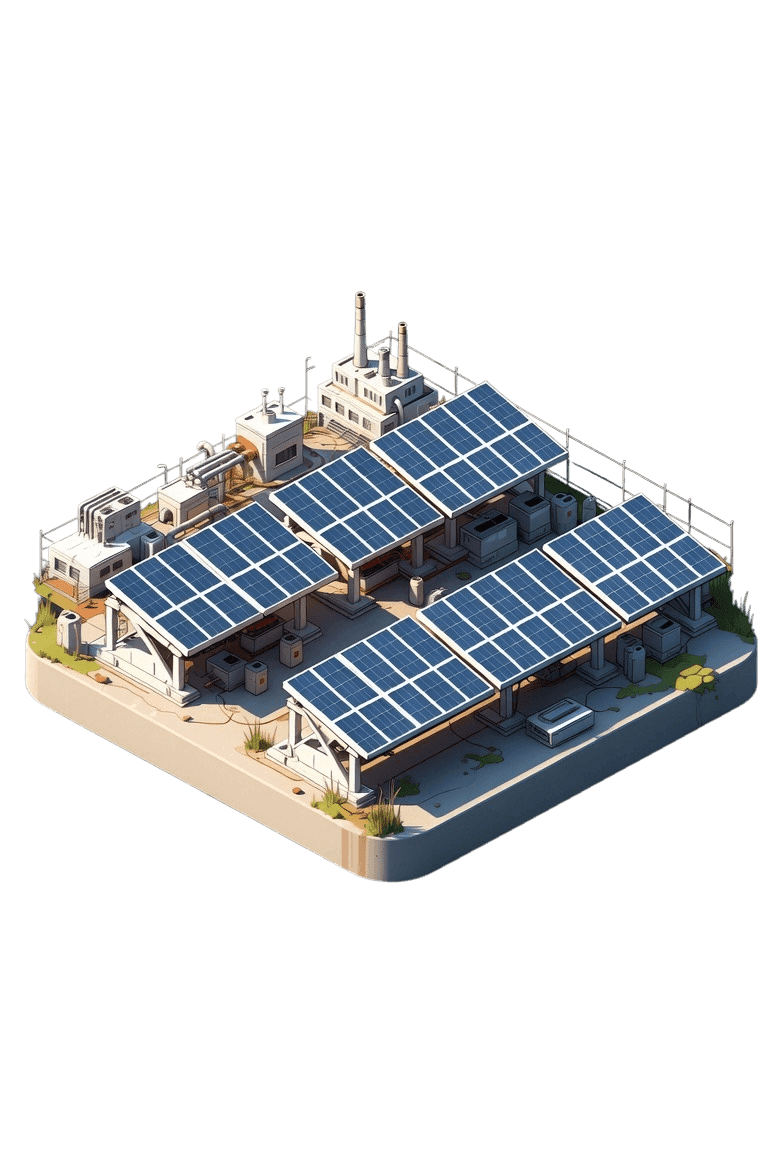
Dinedor parish has a resident population of approximately 300 people, in 134 houses. Vehicular access to the proposed site is via the B4399, a B-classified rural road which carries a 7.5-tonne weight restriction from the Holme Lacy Bridge through Dinedor parish, with onward access through single-track village lanes. A construction programme delivering 30 MW of solar generation across 82 acres would require sustained heavy goods vehicle movements that the local highway network is not engineered to accommodate without disproportionate impact on a small rural community.

In addition, the operational installation, with its 2-metre perimeter security fencing and associated infrastructure, would constitute a permanent and material change to the character of the village core and to the immediate amenity of residents. NPPF Chapter 12 requires planning decisions to ensure developments are sympathetic to local character and history, including the surrounding built environment and landscape setting.

The made Dinedor Neighbourhood Development Plan (28 July 2021), at paragraph 4.5 and at Appendix 1 Supporting Action 2, expressly identifies the 7.5-tonne weight restriction on the B4399 and the Parish Council's commitment to work with the Council and Police to enforce it. The proposal is inconsistent with the statutory development plan made by the parish.

The proposal should be refused on highways and amenity grounds.

Yours faithfully,

Your turn · replace this paragraph

[YOUR FULL NAME] [YOUR ADDRESS] [POSTCODE]
Open in email
06
Renewables policy and alternative sites

Yes to renewables. Not on this land.

National policy supports the deployment of renewable energy, but does not displace the duty to consider alternative, less-sensitive sites. National Policy Statement EN-3 and Government solar guidance encourage brownfield, rooftop and lower-grade agricultural locations before resort to landscapes of high heritage and landscape sensitivity.

Cites: NPS EN-3 (relevant as a material consideration) · NPPF Chapter 14 (paragraph 167) · NPPF Chapter 15 (paragraph 187 and footnote 65)
Read the letter· 419 words
Re.
Objection to proposed solar development on land at Dinedor, HR2 6LG. Renewables policy.

To the Planning Officer,

I am writing to register my formal objection to the proposed solar generating station on land at Dinedor, HR2 6LG. I want to be clear at the outset: I support the transition to renewable energy. My objection is to the location and scale of this specific proposal, not to renewables in principle.

Your turn · replace this paragraph

[INSERT A SENTENCE OR TWO ABOUT YOUR OWN POSITION ON RENEWABLE ENERGY. For example: "I have solar panels on my own roof" or "I support the development of brownfield solar at the Rotherwas Industrial Estate, where it belongs" or "My objection is not anti-renewable; it is about siting." Add a sentence in your own words that makes clear your support for renewables in principle while opposing this specific site.]

RENEWABLES POLICY AND ALTERNATIVE SITES

National policy supports the deployment of renewable energy, but does not displace the need for proper consideration of alternative, less-sensitive sites. National Policy Statement EN-3 and Government guidance on solar siting specifically encourage the use of brownfield, previously-developed land, contaminated land, lower-grade agricultural land, rooftops and car parks before any resort to undisturbed agricultural landscapes of high heritage and landscape sensitivity.

The proposed site at Dinedor is in active agricultural use, lies in the immediate setting of multiple designated heritage assets within a parish containing eleven in total, sits on the immediate fringe of the Wye Valley National Landscape, and falls within the hydrological catchment of the River Wye SAC. It is, on any reasonable analysis, one of the more sensitive landscapes in Herefordshire.

Government policy is clear that solar development should avoid the use of Best and Most Versatile (BMV) agricultural land, classified as Grades 1, 2 and 3a under the Agricultural Land Classification system. NPPF paragraph 187 and footnote 65 require that the economic and other benefits of best and most versatile agricultural land be taken into account, with development on poorer-quality land preferred. The Ministerial Statement of 15 May 2024 reaffirmed that large solar projects should avoid BMV land where possible and target brownfield, contaminated, industrial and lower-quality agricultural alternatives. Recent research published by CPRE (July 2025) found that 59% of England's largest operational solar farms are on productive farmland, and 31% of the area covered is BMV agricultural land. This proposal sits squarely within that pattern.

The applicant has not, on the information made public to date, demonstrated that no less-sensitive alternative location is available or feasible.

The proposal should be refused on policy and alternative-sites grounds.

Yours faithfully,

Your turn · replace this paragraph

[YOUR FULL NAME] [YOUR ADDRESS] [POSTCODE]
Open in email
07
Neighbourhood Development Plan

A made plan, in conflict with the proposal.

The made Dinedor Neighbourhood Development Plan (28 July 2021) forms part of the statutory development plan for the parish under Section 38(6) of the Planning and Compulsory Purchase Act 2004. Several of its policies and supporting paragraphs are in direct conflict with the proposed solar farm.

Cites: Section 38(6) Planning and Compulsory Purchase Act 2004 · Dinedor NDP Policies F, G and J
Read the letter· 366 words
Re.
Objection to proposed solar development on land at Dinedor, HR2 6LG. Conflict with the made Neighbourhood Development Plan.

To the Planning Officer,

I am writing to register my formal objection to the proposed solar generating station on land at Dinedor, HR2 6LG, on the grounds that it conflicts with the made Dinedor Neighbourhood Development Plan.

Your turn · replace this paragraph

[INSERT A SENTENCE OR TWO ABOUT YOUR CONNECTION TO THE PARISH AND THE NDP. For example: "I voted in the parish referendum on the Neighbourhood Development Plan in June 2021 and have lived in Dinedor for [NUMBER] years." Or if you were not involved in the NDP referendum: "I have lived in Dinedor since [YEAR] and value the parish's character that the Neighbourhood Development Plan was made to protect." Add a sentence about why the made plan matters to you.]

NEIGHBOURHOOD DEVELOPMENT PLAN

The Dinedor Neighbourhood Development Plan was approved at parish referendum on 24 June 2021 and made on 28 July 2021. It forms part of the statutory development plan for the parish under Section 38(6) of the Planning and Compulsory Purchase Act 2004. Section 38(6) requires that planning applications be determined in accordance with the development plan unless material considerations indicate otherwise.

The proposal conflicts with the made NDP in several respects:

(1) Policy F (rural environment and landscape) requires that development proposals protect and enhance the rural environment and landscape of the area, including the landscape setting of Dinedor village and the environmental quality of the parish's rivers, streams and brooks. An 82-acre industrial-scale solar generating station does the opposite.

(2) Policy G (heritage assets) requires conservation and enhancement of local heritage assets including lands adjoining Dinedor Camp and lands associated with the likely course of the Rotherwas Ribbon. The application site sits squarely within those identified areas.

(3) Policy J (tranquillity) requires that proposals respect Dinedor's rural environment and tranquillity. A 30 MW industrial generating station, operating for forty years, is incompatible with that policy.

(4) Paragraph 4.5 and Appendix 1 Supporting Action 2 expressly identify the 7.5-tonne weight restriction on the B4399 and the Parish Council's commitment to enforce it.

The proposal should be refused on the grounds that it conflicts with the made development plan and that no material consideration justifies a departure from it.

Yours faithfully,

Your turn · replace this paragraph

[YOUR FULL NAME] [YOUR ADDRESS] [POSTCODE]

Open in email
How to send your objection

Four details that make your letter count.

The mechanics matter as much as the substance. Get these four right and your letter does its full job.

Waiting for ILOS to lodge

Submit your objection.

Once Herefordshire Council validates the planning application, the direct submission link will appear here so you can comment in one click.

Get notified the day the window opens
  1. 01

    Where and how to send.

    Submit online via the Herefordshire Council planning portal at herefordshire.gov.uk (most people prefer this). You can either upload your letter as a PDF or paste the text directly into the comment box. If your letter has headings or covers more than one ground, upload the PDF, since the portal's comment field doesn't support bold or underline. You can also email planning_enquiries@herefordshire.gov.uk or post to Planning Services, Plough Lane, Hereford HR4 0LE. Always quote the application reference.

  2. 02

    Personalise it.

    Add a sentence in your own voice about how you personally use this landscape. Your daily walk, the view from your kitchen window, the path your children take to school. A short personal paragraph alongside the policy grounds is what makes a letter carry weight in a case officer's report.

  3. 03

    Structure for multiple grounds.

    If your letter combines more than one ground from the toolkit above, give each its own heading: "Heritage", "Landscape", "Highways", and so on. Case officers read hundreds of objections; clear sub-headings make your points easy to find and weight properly. Upload as PDF rather than pasting so the headings actually display.

  4. 04

    Send before the window closes.

    The statutory consultation period is at least 21 days, and 30 days if the proposal is determined to require an Environmental Impact Assessment. Comments received after the close are at the case officer's discretion and may not be taken into account, particularly once a decision is drafted. We will alert you the day the window opens, so put your draft together now.

Frequently asked

Should I attach a PDF or paste the text?

Upload as PDF if your letter has headings or covers multiple grounds, since the Council's online comment field doesn't support bold or underline, so headings disappear when pasted. Pasting plain text is fine for a single-ground letter. Both carry equal weight in planning terms.

Will my name be public?

Yes. Comments are published on Herefordshire Council's planning explorer. Your name and address may be visible on the published comment. Email addresses, phone numbers, and signatures are usually redacted before publication.

Can I send more than one letter?

One well-drafted, personalised objection per adult is what carries the most weight. A single letter can cover several grounds, so you do not need to send multiple. Households should send one per adult, not one per address.

Do I have to live in Dinedor?

No. Anyone may object to a planning application. Letters from across Herefordshire and beyond, particularly from people who use the landscape for recreation or value the heritage assets, are all considered.